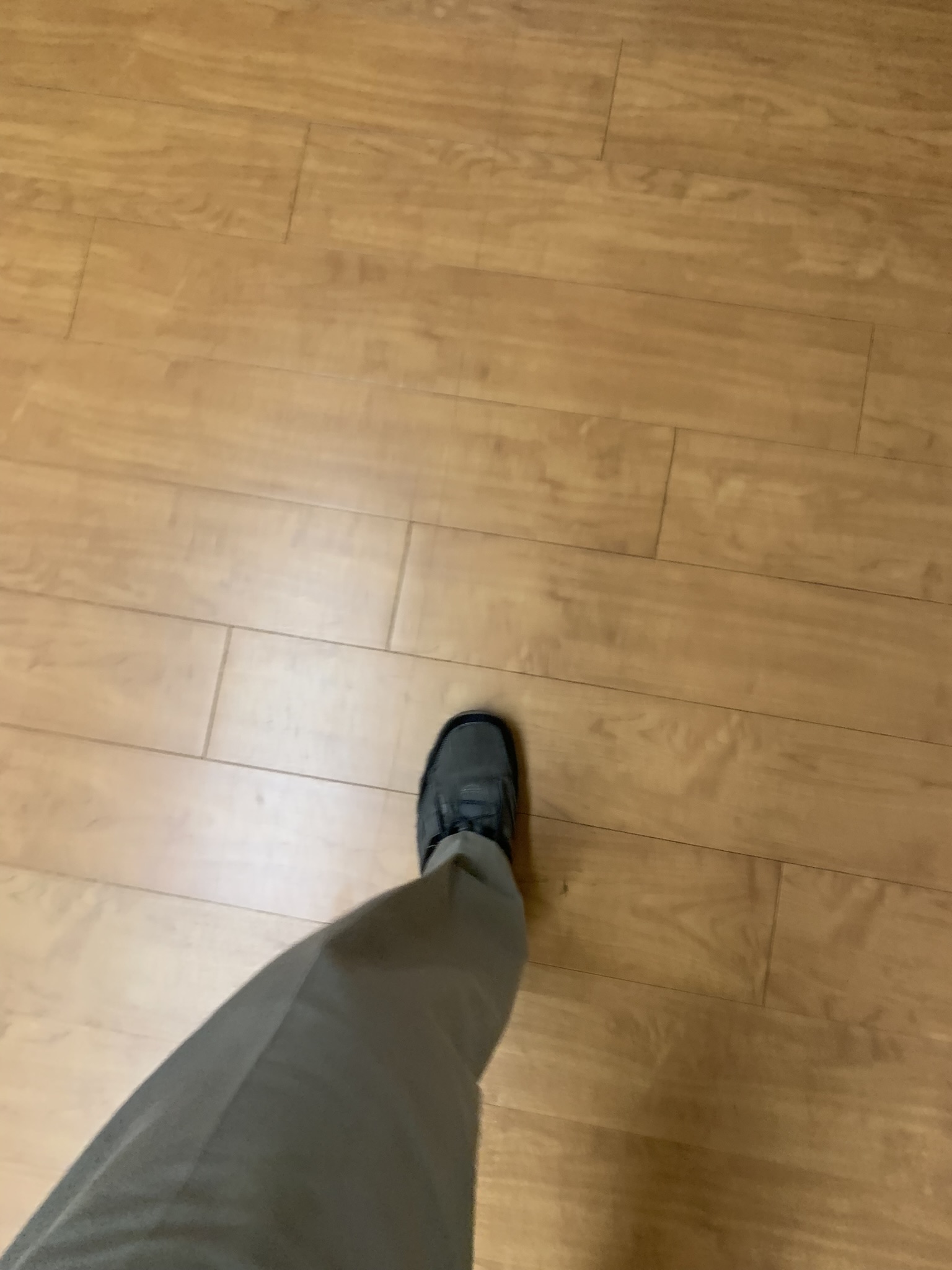
Some of you know that every Sunday when I walk into the hospital to work, I send a photo to Instagram and Facebook. “Happy Sunday” is what I write. For a couple years, every time I went for a run, I posted a photo of a coffee mug on the railing of our deck. It was my way of telling a friend I was running. It was a way to be accountable to him, and, if there were too many gaps, permission for him to ask how I was doing. At the end of most shifts, I send Nancy a photo of my foot, walking down the hospital hallway. It’s a way of saying, “I’m on my way home.”
Words would work in all these situations, of course. Like sermons work, or speeches, or texts, or Facebook posts. But sometimes, showing conveys the message as much as telling does.
The other day we looked at David’s decision to make a house for God. David was in his own house, feeling bad that God only had a tent.
As I thought about that text, I remembered words that are attributed to David. If they are his, they reflect his experience living outdoors, as a shepherd, as a soldier, as an exile.
The heavens declare the glory of God;
the skies proclaim the work of his hands.
Day after day they pour forth speech;
night after night they reveal knowledge.
They have no speech, they use no words;
no sound is heard from them.
Yet their voice goes out into all the earth,
their words to the ends of the world.
These words look at an image, nature in this case, and assign meaning. For David, and for many people, natural beauty is a like my photos sent to the people I know. The image proclaims my running or my departure for home. The stars and sunsets, in David’s words, proclaim God’s glory.
So why did David think God needed a house? Perhaps his comfort captivated him. Perhaps living in a building that he hired people to build suggested to him that God could be contained that way, too.
I wonder how much the images we attend to shape, and maybe limit, how we hear and see God.
 300 words a day